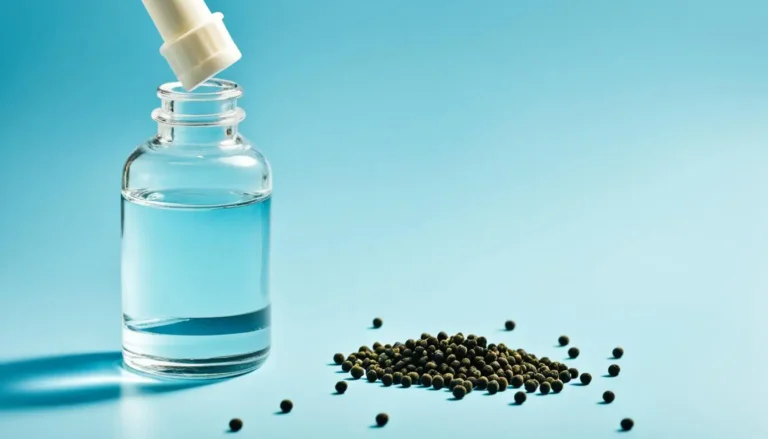
The phrase “it’s just water” is the most common dismissal of homeopathy — and also, in its usual form, an oversimplification. The real claim under dispute is not about water at all: it is whether a substance prepared by serial dilution and succussion can carry biological information after the original molecules are gone. Scientifically, that claim is not accepted: standard pharmacology requires a measurable active substance, and independent reviews generally find little evidence that homeopathy is effective for specific conditions. But the honest version of the argument has two halves. The first is arithmetic: beyond roughly 12C, the probability of any original molecule remaining in a single dose is vanishingly small. The second is homeopathic: that succussion imprints something physical, which homeopaths say the body responds to. Both halves deserve to be stated accurately.
What Dilution and Succussion Actually Do
Homeopathic remedies are made by a defined two-step process repeated many times.
Step one: dilution
A substance — plant, mineral, or animal material — is mixed with a carrier, usually water with alcohol or lactose. The X scale works in 1:10 steps; the C scale works in 1:100 steps.
Step two: succussion
The mixture is then shaken vigorously — traditionally by striking it against a firm surface. This is succussion, and it happens at every step. A remedy is not simply diluted over and over; it is diluted and shaken over and over. Homeopathy insists the shaking is essential, not incidental.
Deal alert: Prime Big Deal Days is on
Right now on Amazon, Prime Big Deal Days brings Prime Day-level prices with free fast Prime shipping. The discount ends [Sunday] — and popular items sell out early.
Buy From Amazon As an Amazon Associate I earn from qualifying purchases.The result: a potency
The final label describes how many such steps were made. A 6C means six 1:100 dilutions; a 30C means thirty; a 200C means two hundred. Mother tinctures (θ) and very low potencies such as 1X or 3X sit at the other end of the spectrum, where real material may still be present.
The Arithmetic Argument
Here is where the chemistry becomes concrete, and it is worth following the numbers rather than relying on slogans.
- A 1C dilution is 1 part in 100.
- A 2C is 1 part in 10,000.
- A 6C is 1 part in 1012.
- A 12C is 1 part in 1024.
The last figure is the one that matters, because a mole of any substance contains roughly 6.02 × 10²³ molecules — Avogadro’s number. A 12C dilution therefore corresponds to a dilution beyond the point at which, on average, not even one molecule of the original substance remains in a mole of the preparation. Common potencies sold in shops and prescribed by practitioners — 30C, 200C, and 1M — are far beyond that threshold.
This is why the scientific objection is so strong and so simple: at these dilutions, standard chemistry has nothing to detect. Not a small amount. Not a trace. Statistically, nothing.
The Homeopathic Counter-Argument
Homeopathy does not dispute the arithmetic. It disputes the conclusion drawn from it. The argument runs like this:
- Water is not a passive background. It has structure — hydrogen bonding and molecular clustering — and that structure can be altered by dissolved substances.
- Succussion is what makes the difference between “diluted water” and a “potentised remedy.” Homeopaths hold that it transfers information from the original substance into the solvent.
- That information, not mass, is what acts on the organism. Hence the law of minimum dose: the smaller the dose, the subtler and often more profound the effect.
- Potency is therefore a measure of preparation, not of concentration.
Some research groups have looked for measurable physical differences between potentised preparations and plain solvent, using methods such as solvatochromic dyes and spectroscopic techniques. This work is exploratory and contested; it has not produced a mechanism that mainstream pharmacology accepts. That is the state of the question, and it should be described that way — not as settled, and not as proof.
What “It’s Just Water” Gets Right and Wrong
- Gets right: at high potencies there is no measurable active substance. That is true, and any claim of a physical active ingredient at 30C is not supportable.
- Gets right: the burden of proof for a new mechanism rests with those proposing it, and independent reviews find little evidence that homeopathy is effective for specific conditions.
- Gets wrong: it implies remedies are literally plain water. High-potency liquid remedies typically contain water and alcohol in defined proportions, and pellets are usually a lactose or sucrose base.
- Gets wrong: it implies low potencies are equally empty. A 1X, 3X, or mother tincture can contain measurable material and behaves more like a conventional preparation.
- Gets wrong: it dismisses the possibility without engaging the specific claim. The interesting question is not “is there material?” but “can preparation change solvent structure in a way that matters?”
Dilution in Homeopathy vs. Dilution in Pharmacology
The word “dilution” is shared, but the two traditions mean different things by it.
- Pharmacology: dilution reduces dose. Smaller dose means less effect, down to a threshold below which no effect can be detected. Concentration is the variable.
- Homeopathy: dilution plus succussion increases potency. Smaller concentration is expected to produce a more subtle and more profound effect. Preparation history is the variable.
- The practical consequence: a conventional product diluted to nothing is discarded as inactive. A homeopathic remedy diluted to nothing is sold as more potent. The two cannot be evaluated with the same assumptions.
This is why arguments often go nowhere: one side is measuring mass and the other is describing preparation.
The Safety Angle That Gets Lost
The dilution debate dominates attention, which can crowd out the practical safety picture. Three points are worth holding separately:
- High dilutions are widely described as low-risk, precisely because little or no active substance remains. The principal documented risk in homeopathy is not toxicity but the delay or replacement of effective conventional treatment.
- Products labelled homeopathic are not always highly diluted. Regulators have warned that some contain substantial amounts of active ingredients, including heavy metals or botanicals, and can cause side effects or drug interactions. Liquid preparations may contain alcohol.
- A label is not a mechanism. “Homeopathic” on a package says something about how a product is marketed, not necessarily about its content or its evidence base.
How to Think About It Honestly
- Separate the two questions. “Is there material?” and “Does it work?” have different answers, and the second cannot be decided by the first alone.
- Read the potency. The dilution argument applies to 30C and above. It applies much less to 1X, 3X, and mother tinctures.
- Notice the framing. Any claim that the scientific debate is settled against homeopathy is broadly accurate regarding clinical efficacy; any claim that it is settled in favour is not.
- Keep consequences in view. Whether or not water carries information, what matters most is whether real treatment is being delayed.
The “Memory of Water” Idea and Why It Is Contested
The popular shorthand for the homeopathic position is that water “remembers”. That formulation is not very useful, because it invites an argument about mysticism rather than about measurable structure. What homeopathy actually proposes is narrower and more testable: that serial dilution combined with succussion alters some physical property of the solvent, and that this alteration can be detected and can matter biologically. Whether such a property exists, and whether it survives the dilution arithmetic, are precisely the questions on which the scientific objection turns.
What Would Change the Debate
The argument would move if any of the following were established and reproduced independently:
- A physical difference between a potentised preparation and an identically prepared plain solvent, measured consistently across laboratories.
- A plausible mechanism linking such a difference to a biological effect.
- Clinical results that persist when trials are designed around individualised prescribing and still meet robust methodological standards.
Until then, the honest position is the one stated at the top: the arithmetic is not in dispute, the proposed mechanism is not accepted, and independent reviews generally find little evidence of effectiveness for specific conditions.
Frequently Asked Questions
Is homeopathy literally just water?
No, not literally. High-potency liquid remedies typically contain water and alcohol, and pellets have a lactose or sucrose base. What is true is that at high potencies no measurable amount of the original substance remains.
At what potency does nothing remain?
Above roughly 12C, the probability of any original molecule remaining in a dose becomes vanishingly small, because a mole contains about 6.02 × 10²³ molecules. Common potencies such as 30C and 200C are far beyond that point.
What is succussion and why does it matter?
Succussion is the vigorous shaking applied at each dilution step. Homeopathy holds that it is what turns a dilution into a “potentised” remedy by transferring information from the original substance. Mainstream science does not accept that mechanism.
Do low potencies and mother tinctures follow the same logic?
No. Low potencies and mother tinctures may contain measurable material, so they behave more like conventional preparations — including in terms of possible interactions and side effects.
Does the dilution question settle whether homeopathy works?
It is central to the scientific criticism, and independent reviews generally find little evidence that homeopathy is effective for specific conditions. Honest discussion should present the arithmetic, the homeopathic counter-argument, and the review conclusions side by side.
General educational content; not a substitute for professional medical advice, diagnosis, or treatment. Always consult a qualified clinician for serious or worsening symptoms.