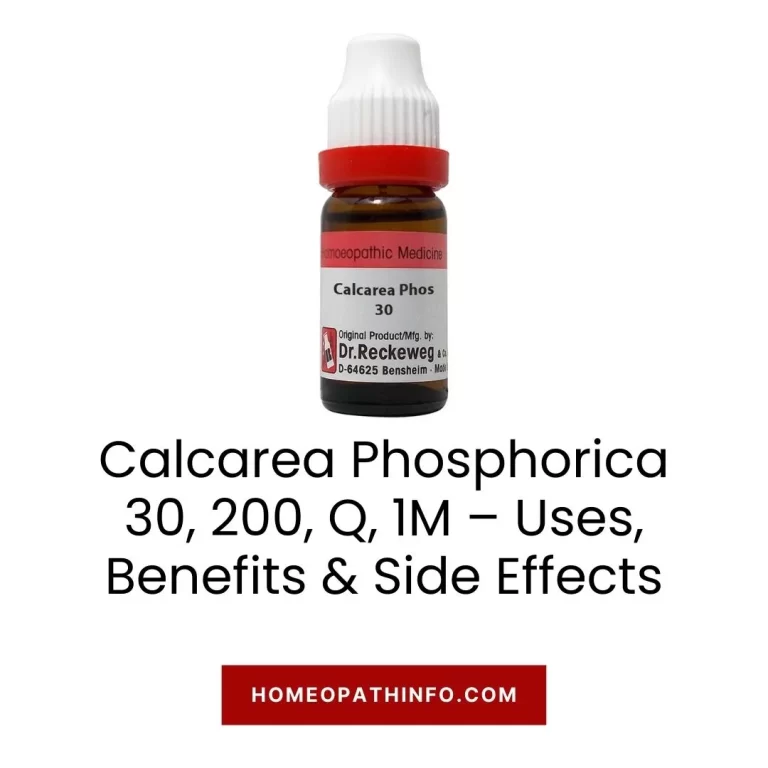
Liquid drops, pills, and tablets are delivery forms for the same homeopathic preparation — the remedy itself is defined by its source substance and its potency, not by its shape. A 30C of a given remedy in liquid form and a 30C of the same remedy in pill form are the same potency of the same remedy, prepared from the same dilution and succussion process; what differs is the carrier and how the dose is administered. That said, homeopaths describe practical differences in handling, absorption, dosing precision, and suitability for children or pets, which is why the form on the shelf is not entirely irrelevant.
What Actually Defines a Remedy
When a homeopath writes a prescription, the identifying information is two-part:
- The remedy — the source substance and its symptom profile, as recorded in the materia medica.
- The potency — the number of dilution and succussion steps, on the X, C, or another scale.
The delivery form is a third, lower-order choice. It answers “how will this be given?”, not “what is this?”. This is the key distinction to hold on to: a change of form is not a change of medicine.
The Three Main Forms
Pills (globules)
Small sugar-based spheres that have been impregnated with the remedy, usually by moistening them with the liquid potency. They are the traditional and still the most common form in classical homeopathy.
Deal alert: Prime Big Deal Days is on
Right now on Amazon, Prime Big Deal Days brings Prime Day-level prices with free fast Prime shipping. The discount ends [Sunday] — and popular items sell out early.
Buy From Amazon As an Amazon Associate I earn from qualifying purchases.- Pros: easy to count and dispense, stable if stored well, dissolve easily, workable for children who will take a sweet pellet.
- Considerations: the sugar base can matter for people avoiding sugar; they must be handled and stored properly.
Tablets
Compressed lactose or sucrose discs, generally larger than pills. Some are marked for splitting. They are common in over-the-counter ranges.
- Pros: firm, easy to handle, longer shelf life in everyday conditions, can be halved.
- Considerations: slower to dissolve than a tiny globule; splitting one may be awkward if the dose is meant to be a single unit.
Liquid drops
An alcohol-and-water dilution of the potency, supplied in a dropper bottle and measured in drops, which may be taken directly or diluted in water.
- Pros: easy to adjust a dose downward by taking fewer drops, straightforward to dilute into a glass of water and sip, often described as the easiest form for very sensitive people to use gently.
- Considerations: contains alcohol, so it may not suit everyone; must be measured; the bottle can be knocked or spilled more easily than a solid form.
Do the Forms Actually Differ? A Direct Comparison
- Remedy and potency: identical across forms. A 6C is a 6C whether it comes as drops, pills, or tablets.
- Carrier: differs — sugar globules, compressed lactose, or an alcohol-water solution.
- Dose adjustability: liquids allow the finest adjustment (one drop versus three), then tablets (splitting), then pills (usually one, or a counted number).
- Ease for children and pets: pills are often described as the easiest, since a small sweet globule can be placed in the cheek or dissolved in water.
- Alcohol content: present in liquid form, absent in solid forms.
- Storage sensitivity: liquid bottles are more exposed to spillage and evaporation; solids are more forgiving but still need care.
- Convenience away from home: a small vial of pills is easier to carry than a dropper bottle.
Read the rows carefully: the differences cluster around handling, not around the medicine’s identity.
Where the Form Does Matter
Three situations where the choice is more than cosmetic:
- Very young children and infants. Solid forms are generally easier to administer safely, and liquid forms containing alcohol are usually avoided or require specific guidance.
- People described as highly sensitive. Homeopaths sometimes prefer liquids precisely because the dose can be split finely — a few drops in water, or a single drop — rather than committing to a whole tablet.
- Pets. Practically, a liquid placed in a water bowl or a pill dissolved in a small amount of food is often simpler than persuading an animal to accept a solid form directly.
How Homeopathic Forms Differ From Herbal and Conventional Preparations
- Herbal preparations are typically used at material strength — a measurable amount of plant material per dose — and come as tinctures, teas, capsules, or powders. The dose is a quantity of substance.
- Conventional medicines are formulated around a measured active ingredient plus excipients, and the form is chosen for how reliably that ingredient is absorbed.
- Homeopathic remedies are defined by remedy plus potency, prepared by repeated dilution and succussion. In homeopathic theory the form is a means of giving the preparation rather than the source of its action.
This is why the same word — “tablet” — can appear in all three contexts while meaning something technically quite different.
Practical Guidance on Choosing a Form
- Follow the prescriber’s instruction first. If a practitioner specified drops, the reason may be dose precision or sensitivity rather than preference.
- Match the form to the situation. A travel kit favours solids; a sensitive patient or a child may be better served by a liquid.
- Check for alcohol if that matters to you, and consider lactose or sugar content if you have a related dietary requirement.
- Do not convert forms by assuming equivalence in dose. A “dose” of drops and a “dose” of pills are not the same quantity of preparation, even at the same potency.
- Store all forms properly — away from heat, strong odours, and direct light.
Handling Rules That Apply to Every Form
- Take the dose as instructed and note the time.
- Avoid strongly aromatic substances around dosing, a long-standing convention in homeopathic practice.
- Keep the container closed and out of direct sunlight.
- Do not tip pills back into the vial after they have been poured into your hand.
- Record what you took so the response can be judged at review.
Storage and Shelf Life by Form
The form you choose also determines how the remedy behaves in a cupboard or a suitcase:
- Pills (globules): take up almost no room and tolerate a small vial well, making them the easiest form to carry. They are sensitive to strong odours and to moisture if the container is left open.
- Tablets: firm and reasonably forgiving, but bulkier than globules and more likely to chip if handled loosely.
- Liquid drops: sealed bottles keep well, but the glass can break, contents can evaporate if the cap is loose, and a spilled bottle is unrecoverable in a way that scattered pills are not.
Across all three, the storage principles are the same — keep them cool, closed, out of direct sunlight, and away from strongly scented products such as essential oils, mentholated balms, or spices. A dedicated small tin or pouch solves most of the practical problems at once.
How to Choose a Form for a Child or a Pet
This is the situation where the choice genuinely stops being cosmetic:
- Check the alcohol question first if you are considering a liquid form for a young child. Liquid potencies are commonly alcohol-based, so a solid form may be preferred.
- Consider how the dose will actually be given. A small globule can be tipped into the cap and placed in the cheek, or dissolved in a little water.
- For pets, dissolve rather than persuade. A pill dissolved in a small amount of water in a bowl, or a liquid added to drinking water, is usually simpler than offering a solid directly.
- Follow professional advice. Dosing for infants and for animals sits outside general guidance, so both schedule and form should come from a practitioner.
Does the Form Change How Fast a Remedy Acts?
Homeopaths sometimes describe liquids as acting a little more promptly, since a solution is already dispersed, and solids as more convenient to carry and count. That is a practical preference rather than a settled property of the preparations, and it is not a reason to switch forms mid-prescription on your own. If timing matters in your case, the question worth asking is which form your practitioner intended and why — not which form acts fastest in the abstract.
Frequently Asked Questions
Are homeopathic drops stronger than pills?
No. At the same potency they are the same preparation in a different carrier. Drops allow a finer dose adjustment, which some practitioners prefer for sensitive cases, but that is a handling difference rather than a strength difference.
Can I switch between drops and pills at the same potency?
That is a prescribing decision rather than a simple substitution, because the quantity that constitutes a dose differs between forms. Ask the practitioner who set the prescription.
Do homeopathic pills contain sugar?
Pills and tablets are typically made from sugar or lactose, so they contain a small amount of it. If this matters for your diet or health, check with your practitioner or the manufacturer.
Do liquid homeopathic remedies contain alcohol?
Liquid potencies are commonly alcohol-and-water based. If alcohol is a concern — for children, or for personal or health reasons — that is a reason to ask about a solid form.
Which form is best for a baby or a pet?
Practically, small solids are often easiest to give, and some practitioners prefer a liquid diluted in water for animals. Any decision involving infants or animals should follow professional guidance.
General educational content; not a substitute for professional medical advice, diagnosis, or treatment. Always consult a qualified clinician for serious or worsening symptoms.