Borax: The Homeopathic Remedy for Mouth Ulcers, Motion Sickness, and Fear of Downward Motion
Borax surprises people. The white powder in the laundry cupboard — a humble cleaning and flux agent known since ancient times — becomes, in homeopathy, a gentle and precise medicine for canker sores, motion sickness, and one of the most distinctive fears in the materia medica: the fear of downward motion. If you have watched a baby fling up its hands in panic the moment you lower it into the cot, or struggled with mouth ulcers that bleed the instant food touches them, Borax may be exactly the remedy you need.
What Is Borax? History and Overview
Borax, also known as sodium borate or Borax Veneta, is a naturally occurring mineral salt with a long human history: the ancient Egyptians used it in glassmaking and mummification, Marco Polo brought accounts of Tibetan borax lakes to Europe, and Persian traders shipped it westward as buraq. For centuries it served as a soldering flux, a glaze ingredient, and an antiseptic wash. In crude form it is an irritant and, in larger amounts, toxic — which is why the homeopathic preparation matters so much.
Borax entered homeopathy through Samuel Hahnemann’s provings in the early 1800s and quickly earned a reputation as one of the great children’s remedies. The symptoms that emerged — dread of downward motion, extreme sensitivity to sudden noise, tender bleeding mouth ulcers — have been verified again and again in practice, especially in infants. Homeopaths still reach for Borax whenever that cluster appears, in children or adults.
The remedy is made by repeatedly diluting and succussing (shaking) the mineral until no toxic crude borax remains, leaving a safe preparation that works on homeopathy’s core principle: like cures like.
Deal alert: Prime Big Deal Days is on
Right now on Amazon, Prime Big Deal Days brings Prime Day-level prices with free fast Prime shipping. The discount ends [Sunday] — and popular items sell out early.
Buy From Amazon As an Amazon Associate I earn from qualifying purchases.Key Indications: When Borax Is the Right Remedy
Borax’s picture centres on three poles: the mucous membranes of the mouth and gut, the skin, and an exquisitely sensitive nervous system. These six situations are the classic indications.
Mouth Ulcers and Canker Sores
This is Borax’s calling card. The ulcers (aphthae) are small, round, whitish sores inside the cheeks, on the tongue, or on the gums, with two telltale features: the mouth feels hot and tender, as if scalded, and the ulcers bleed on the slightest touch — when eating, when brushing, even when the tongue probes them. Children often cry during feeds because the sores bleed and sting the moment anything makes contact. The gums may be swollen, with painful gum boils, and white, fungus-like patches can appear alongside the ulcers. If ulcers bleed easily and eating hurts, think of Borax first.
Fear of Downward Motion and Falling
No other remedy has this keynote so sharply. The Borax patient — often a baby or young child, but adults too — experiences real terror from anything that moves downward: being laid into a crib, carried downstairs, lowered into a bath, or riding a descending elevator or escalator. The face becomes anxious, and the child throws up its hands and grabs for support, as if sure it is about to fall. Older children may refuse to go down stairs or cling tightly when lifted. This dread can appear in nearly any complaint, and when present, it strongly points to Borax.
Motion Sickness and Vertigo
Borax is a useful remedy for nausea and vertigo connected with movement, and the downward element colours it here too. The nausea is worse with downward or jolting motion — car sickness, sea sickness, fairground rides that drop, plane turbulence. Dizziness may come with trembling and anxiety rather than simple queasiness. If the person also shows noise sensitivity or mouth ulcers, Borax becomes a strong candidate over the other motion-sickness remedies.
Digestive Complaints and Diarrhea
Boericke’s materia medica describes Borax stools as loose, pappy, and offensive, especially in children. The diarrhea is often preceded by colicky griping and frequently appears during teething or alongside an aphthous sore mouth — the classic pairing of gut and mucous-membrane irritation. There may be distension after eating, nausea, and a sensation “as if diarrhea would result.” Babies with Borax diarrhea are irritable, easily frightened, and often show the downward-motion dread at the same time.
Skin Conditions and Eczema
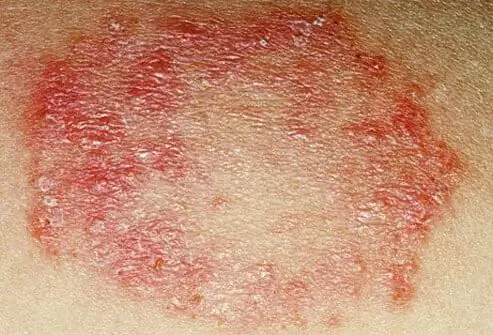
Borax skin is unhealthy skin: every little scratch, bite, or graze tends to fester instead of healing cleanly. Eczema of the fingers and toes, sometimes with thickening or loss of nails, is a noted feature, as are herpetic (cold-sore-like) eruptions and itching on the backs of the finger joints. Psoriasis and erysipelas-like red, shiny swellings appear in the older literature, and a red, shiny nose in young women is a curious minor keynote. When skin trouble combines with mouth ulcers or nervous sensitivity, Borax is worth considering.
Thrush and Infant Complaints
Borax is a classic remedy for thrush (oral candidiasis) in babies — white, curd-like patches inside the cheeks and on the tongue, with a baby who cries when nursing because the sore mouth stings. Beyond thrush, it covers a cluster of infant difficulties: crying when put down, screaming before urinating because the urine is hot and smarting, and teething diarrhea. It also suits nursing mothers — for example, pain in the breast opposite the one feeding. For the nervous, easily frightened baby with a sore mouth, Borax is a household staple in many homeopathic families.
The Borax Constitution: Personality and Temperament
The Borax person is, above all, nervous and easily frightened, startling at a sudden noise, a door slamming, a gunshot in the distance, thunder. The ear sensitivity is to the slightest noise rather than loud ones — a whisper or a rustle can disturb more than a shout. The face often carries an anxious expression, and the fear of falling may extend into general timidity.
Children needing Borax are often clingy, jumpy, and fearful, waking with a frightened cry or unable to sleep because of heat in the head. Adults may be quietly perfectionistic, easily flustered, and deeply sensitive to criticism or surprises. Beneath the anxiety is usually a soft, gentle temperament — Borax people are not aggressive; they are simply wired for alarm. The mental symptoms are the remedy’s most reliable guides: when the fear of downward motion and noise sensitivity are present, consider Borax even if the physical complaint seems unrelated.
Modalities: What Aggravates and What Relieves
Worse from:
- Downward motion — being laid down, carried downstairs, descending lifts or escalators
- Noise — sudden or slight noises, thunder, gunshots
- Smoking and smoky rooms
- Warm weather — heat aggravates the skin and the general state
- After the menstrual period
Better from:
- Pressure — firm pressure or holding soothes the anxiety and the pains
- Warmth — a warm compress or being held snugly eases local discomfort, though hot, stuffy weather still aggravates
- Evening — symptoms ease as the day goes on
- Cold weather and cool air — a useful contrast with remedies like Sulphur, which hate the cold and love warmth
If a child’s symptoms flare when being put down to sleep and settle when held firmly — or mouth ulcers sting more in warm rooms and ease in cool air — you are looking at a Borax pattern.
Dosage and Potencies: 6C, 30C, and 200C
Homeopathic potencies are chosen to match the situation. Borax is commonly used in 6C, 30C, and 200C.
- 6C — gentle, frequent dosing. Best for infants, small children, and mild local complaints such as a few canker sores or a touch of teething diarrhea. One pellet dissolved under the tongue or in a little water, three times a day for a few days. Stop as soon as improvement begins.
- 30C — the everyday acute potency. The best all-round choice for most situations: mouth ulcers, thrush, diarrhea, or motion sickness. For travel sickness, take one dose about 30 minutes before the journey and repeat if needed. In an acute episode, one dose every few hours for up to three doses, then only if symptoms return.
- 200C — deeper, less frequent. Reserved for the constitutional picture: marked fear of downward motion, strong noise sensitivity, recurring thrush or ulcers with Borax anxiety. Give a single dose and wait; do not repeat unless improvement stalls and symptoms clearly return.
Whichever potency you choose, take the remedy about 15 minutes away from food, drink, and strong flavors, and avoid strong coffee, mint, camphor, and vinegar around the dose. If there is no improvement after a reasonable trial, or the condition worsens, stop and consult a qualified homeopath or your doctor. Minor symptoms respond to 6C or 30C; persistent or emotional patterns to 30C or 200C under guidance; anything serious is a medical matter.
Differentiation from Similar Remedies
Borax shares territory with several better-known remedies; the differences matter.
Borax vs. Cocculus
Both are famous for motion sickness, but they are easy to tell apart. Cocculus nausea is provoked by any motion — a carriage ride, a car journey, a rocking boat — with a hollow, empty feeling in the stomach, extreme weakness, and aggravation from loss of sleep; the patient wants to lie perfectly still. Borax, by contrast, is aggravated specifically by downward motion and brings symptoms Cocculus lacks entirely: mouth ulcers that bleed on touch, thrush, and the fear of falling. If the sick traveler also has a sore mouth, Borax fits; if they are simply exhausted and worse from the slightest movement, choose Cocculus.
Borax vs. Natrum Muriaticum
Natrum Muriaticum (common salt) is another great mouth-ulcer remedy, but the pattern differs. Nat Mur’s sores are often herpetic — cold sores on the lips triggered by sun, grief, or exhaustion — and the person is reserved, suppresses emotion, hates consolation, and craves salt. Borax ulcers are inside the mouth, bleed on touch, and appear alongside the fears of downward motion and noise — fears Nat Mur does not share. The personalities are almost opposites: Nat Mur the quiet stoic, Borax the anxious startler.
Borax vs. Mercurius
Mercurius (mercury) also features a sore, ulcerated mouth, but the picture differs: profuse saliva, a swollen tongue with tooth imprints, metallic taste, offensive breath, spongy bleeding gums, and marked worsening at night with drenching sweats. Borax mouths are hot and tender rather than salivating, the ulcers bleed specifically on touch or eating, and the person shows Borax nervousness and the downward-motion fear. No salivation, no night sweats, no metallic taste — and you are looking at Borax, not Mercurius.
Borax vs. Sulphur
Both have unhealthy skin that erupts and itches, but the resemblance ends there. Sulphur is the heat remedy: burning itching, redness of orifices, worse from warmth and washing, worse around 11 a.m., morning diarrhea that drives the person out of bed, and an untidy “ragged philosopher” personality. Borax skin is more about suppuration and herpetic eruptions with nail involvement, and it is better in cold weather, worse in warm. Sulphur’s mind is expansive and self-absorbed; Borax’s is timid, anxious, and noise-sensitive. Same skin, opposite temperament.
Safety Notes
The most important safety point is the difference between the crude substance and the homeopathic remedy. Household borax powder and boric acid are toxic if ingested — causing nausea, vomiting, diarrhea, and in larger amounts serious poisoning, especially in children. Never swallow them, rub them on gums, or add them to food. The potentized remedy, by contrast, is diluted so many times that no toxic borax remains; it is safe for children and babies when used as directed.
That said, a few sensible rules apply:
- Keep all homeopathic remedies out of children’s reach, and store them away from heat and strong odors.
- Do not use Borax as a substitute for medical care. Mouth ulcers that persist beyond two weeks, spread, or come with fever, weight loss, or difficulty eating need a doctor’s assessment.
- In infants, diarrhea can dehydrate quickly: watch for dry diapers, sunken fontanelle, lethargy, or reduced feeding, and seek medical help promptly.
- Thrush in a baby older than a few months, or thrush that recurs despite treatment, should be checked by a healthcare professional.
- If you are pregnant or nursing, mention the remedy to your practitioner — homeopathy is gentle, but individual advice is always wisest.
Frequently Asked Questions
Is homeopathic Borax safe for babies with thrush?
Yes. The potentized remedy is safe for infants and is a classic treatment for oral thrush when the baby cries during feeds and the mouth is tender. Use a low potency such as 6C; if the thrush is severe, persistent, or the baby is failing to feed, see your doctor or pediatrician.
What potency should I use for mouth ulcers?
For a few canker sores, 6C three times a day is a good start. If the ulcers are painful and recurrent, with the typical Borax anxiety or noise sensitivity, 30C is the better choice. Stop once the sores begin to heal.
Can Borax help with motion sickness in children?
Yes — 30C about 30 minutes before travel is standard, especially when the nausea is worse on downward or jolting motion and the child is fearful or noise-sensitive. Repeat only if symptoms return.
Is there any danger of boron poisoning from the homeopathic remedy?
No. The remedy is diluted far beyond the point where any crude borax remains, so it cannot cause boron toxicity. The danger lies only with the raw household powder, which should never be ingested.
How quickly does Borax work?
In acute situations such as a fresh crop of mouth ulcers or teething diarrhea, improvement is often noticeable within hours to a day or two. Longstanding anxiety or recurrent conditions respond more slowly and may need a higher potency and professional guidance.
Can I take Borax alongside my regular medications?
Homeopathic remedies do not interact with conventional medicines the way drugs do and can generally be taken alongside them. Keep the 15-minute separation from food, drink, and strong flavors, and continue prescribed medication unless a doctor advises otherwise.
Conclusion
Borax is a small remedy with a very sharp picture: tender bleeding mouth ulcers, thrush in babies, unhealthy skin, a nervous startle response to noise, and a dread of downward motion found in almost no other remedy. When those threads run through a case — child or adult — Borax often brings surprisingly quick relief. Let the symptoms guide you: match the remedy to the person, use the lowest potency that works, and seek professional help whenever things are severe, persistent, or unclear.