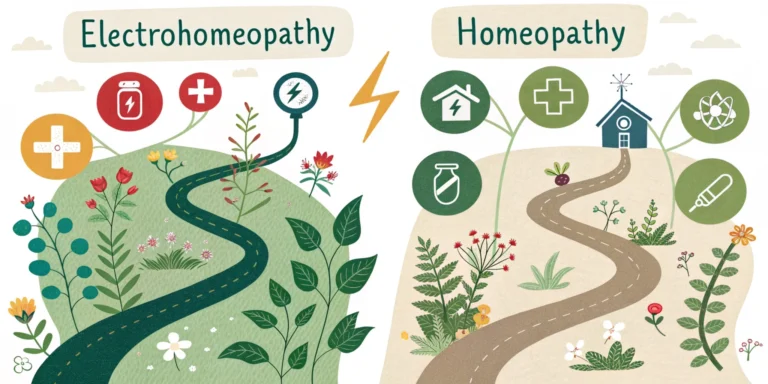
People often lump homeopathy together with herbal remedies, “natural” medicine, and even regular doctor visits, but they are actually quite different in how they work. If you are new to complementary medicine, it helps to see the distinctions clearly. This guide compares homeopathy with three other common approaches — herbal medicine, allopathic (conventional) medicine, and naturopathy — in plain language, so you can tell them apart and understand when each is typically used.
The One-Line Difference
Each approach answers the question “how do we help the body?” in a different way:
- Homeopathy uses highly diluted substances matched to a person’s symptom pattern.
- Herbal medicine uses plant-based substances in meaningful amounts to support the body.
- Allopathic medicine uses drugs, procedures, and other interventions to treat diagnosed conditions.
- Naturopathy is a broader system that combines lifestyle, nutrition, and various natural therapies.
Homeopathy, in Brief
Homeopathy is built on the law of similars (“like cures like”) and on preparing remedies through dilution and succussion. A remedy is chosen to match the individual’s specific symptoms, and the preparation is highly diluted. The emphasis is on the person and their pattern, and remedies are typically low-intensity.
Herbal Medicine
Herbal medicine uses plants — as teas, tinctures, extracts, or powders — in amounts that contain active plant compounds. It works with the substance itself rather than with extreme dilution. A herbalist may recommend, for example, a specific herb traditionally used for digestion or for calm.
Deal alert: Prime Big Deal Days is on
Right now on Amazon, Prime Big Deal Days brings Prime Day-level prices with free fast Prime shipping. The discount ends [Sunday] — and popular items sell out early.
Buy From Amazon As an Amazon Associate I earn from qualifying purchases.The key contrast with homeopathy: herbal medicine uses the plant’s material in a present, measurable form, while homeopathy uses a prepared, highly diluted form chosen by symptom matching.
Allopathic (Conventional) Medicine
Allopathic medicine is the mainstream medical system most people think of first. It diagnoses conditions and treats them with medicines, surgery, radiation, and other evidence-based interventions. It relies on clinical testing, imaging, and established treatment protocols.
The key contrast: allopathic medicine targets the diagnosed disease with potent interventions, whereas homeopathy aims to support the individual through a matched, diluted preparation. They are very different in mechanism, strength, and role.
Naturopathy
Naturopathy is a broad complementary system that focuses on supporting the body’s own healing through a combination of tools: nutrition, lifestyle changes, exercise, stress management, and a variety of natural therapies (which can include herbs, and sometimes homeopathy among them). A naturopath takes a wide view of diet, habits, and overall health.
The key contrast: naturopathy is an umbrella approach, while homeopathy is one specific method. Homeopathy can be one of the tools a naturopath uses, but the two are not the same thing.
Putting It All Together
- Substance used: homeopathy = highly diluted preparation; herbal = plant material; allopathic = drugs/procedures; naturopathy = a mix, centered on lifestyle.
- Selection logic: homeopathy = symptom matching to the individual; herbal = plant’s traditional use; allopathic = diagnosis-based; naturopathy = holistic lifestyle plan.
- Strength/intensity: homeopathy and naturopathic lifestyle tools tend to be gentle; allopathic interventions can be potent.
- Primary role: homeopathy and naturopathy are usually complementary; allopathic medicine is the primary system for diagnosis and serious treatment.
How People Actually Use Them
Many people use these approaches together rather than as rivals. A common pattern is to rely on conventional medicine for diagnosis and serious treatment, and to use complementary approaches — such as homeopathy for everyday symptoms, or naturopathic lifestyle support for overall wellbeing. The important habit is to keep all your providers informed about what you are using, so everyone has the full picture.
Frequently Asked Questions
Is homeopathy the same as herbal medicine?
No. Herbal medicine uses plant material in meaningful amounts, while homeopathy uses highly diluted preparations chosen by symptom matching.
Is homeopathy part of naturopathy?
Sometimes. Naturopathy is a broad system that may include homeopathy as one tool, but the two are not identical.
How is homeopathy different from regular (allopathic) medicine?
Allopathic medicine treats diagnosed conditions with drugs and procedures; homeopathy aims to support the individual with a matched, diluted preparation. They differ in mechanism, strength, and role.
Can I use homeopathy alongside conventional treatment?
Many people do, treating homeopathy as complementary. Tell your doctors about everything you use, and never let complementary care replace needed medical treatment.
Which approach should I use?
It depends on your goal and the situation. For diagnosis and serious conditions, rely on conventional medicine. For complementary support, understand each approach’s method before choosing.
General educational content; not a substitute for professional medical advice, diagnosis, or treatment. Always consult a qualified clinician for serious or worsening symptoms.