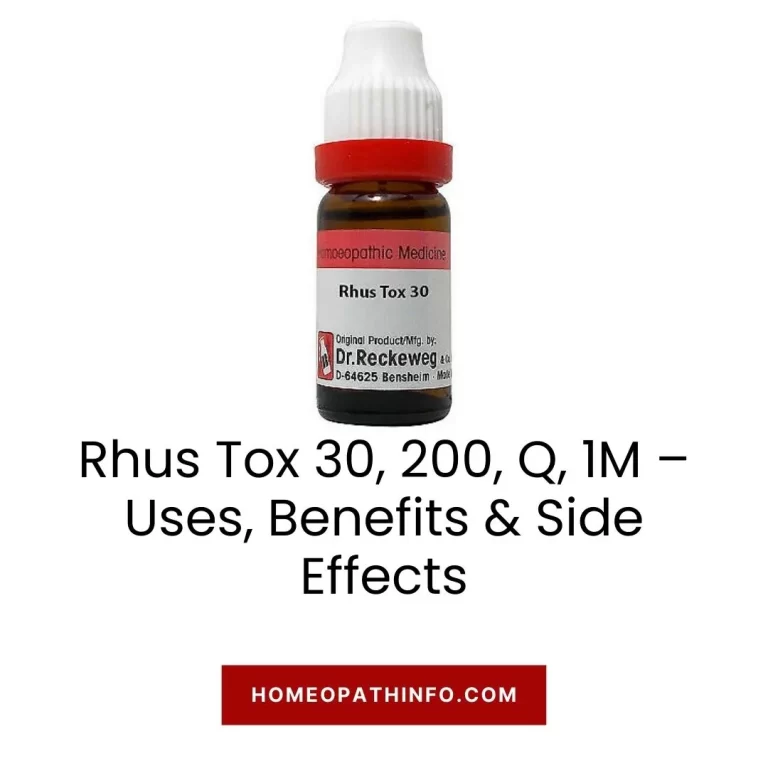
The most persistent myth about mother tinctures is that they are simply “stronger homeopathy”. They are not. A mother tincture is the concentrated botanical extract — marked Q, MT, or θ — from which potencies are made; a 30C contains essentially no plant material at all. Other common myths hold that a higher potency number means a stronger physical dose, that mother tinctures are automatically safe because they are “natural”, that more drops work faster, and that a tincture never expires. Each of those is worth unpacking honestly, because the misunderstandings run in both directions — some people treat a tincture as a homeopathic potency, and others treat it as a herbal medicine that “contains no active substance”.


Myth 1: “A Mother Tincture Is Just a Stronger Homeopathic Remedy”
Where it comes from: the bottle says Arnica and so does the 30C vial, so people assume it is the same thing at a higher strength.
What is actually true: the two sit at opposite ends of the preparation chain. A mother tincture is the raw extract, containing measurable plant constituents and alcohol. A 30C has been diluted to 10⁻⁶⁰ and succussed at each step — far past the point at which any original molecule would be expected to remain.


Why it matters: the practical implications differ. A tincture is dosed in drops, applied topically, and carries an alcohol consideration. A potency is taken as small pills or drops and is not a concentrated substance at all. Using one in the expectation of the other is the most common error in homeopathic self-care.
★ VIP MEMBERSHIP : Get a Dedicated Homeopath in Your Pocket All Month
Healing chronic issues takes ongoing adjustments. Unlock a full month of direct, 1-on-1 text access to Dr. Sheikh Abdullah for tailored remedy protocols, acute family care, and holistic follow-ups whenever you need them. 100% private written consultations • No video calls required • Cancel anytime.
Start Your Consultation As an Amazon Associate I earn from qualifying purchases.Myth 2: “Higher Potency Means a Stronger Dose”
This myth sits underneath a lot of confusion. In chemical terms, the relationship is the reverse: 200C is far more dilute than 6C. In homeopathic terms, the claim is about dynamisation rather than concentration — homeopaths hold that repeated dilution and succussion change the way the preparation acts, and that potency is therefore not a strength axis in the ordinary sense.


The honest summary: whichever framework you use, a bigger number on the label does not mean “more of the substance”. Anyone who assumes it does will misjudge both tinctures and potencies.
Myth 3: “It’s Natural, So It’s Automatically Safe”
Mother tinctures contain real plant material and real alcohol, which is precisely why they are not interchangeable with high potencies on safety grounds.


- Alcohol: relevant for children, in pregnancy, while breastfeeding, and for anyone avoiding alcohol.
- Plant constituents: some of the plants used are discussed in the herbal literature with cautions — chelidonium and golden seal are the usual examples.
- Skin irritation: undiluted application can sting or redden.
- Interaction potential: botanical extracts are more likely than ultra-diluted potencies to interact with medication.
Homeopathic practice itself treats the tincture form as the one requiring the most care, which is the opposite of what “it’s just natural” implies.
Myth 4: “Mother Tinctures Are Just Water”
This is the reverse error, usually aimed at homeopathy in general. Whatever one concludes about a 30C, the criticism simply does not apply to a mother tincture, because it is a genuine botanical extract with measurable constituents. Conflating the two is a category mistake — it lumps a herbal-strength liquid in with a preparation defined by its extreme dilution.
The clean definition, worth memorising: a mother tincture is a concentrated botanical extract; a potency is what that extract becomes after repeated dilution and succussion. One statement cannot be true of both.
Myth 5: “More Drops Work Faster”
Homeopathic practice does not treat the tincture as something to be escalated. The traditional approach is to start with a small, diluted amount and observe, lengthening the interval when things are improving rather than increasing the dose.
- Doubling the drops does not double the effect — the relationship is not dose-linear in the way a painkiller is.
- More drops means more alcohol, which is a real downside with no compensating certainty.
- Escalation obscures the observation. If you change the amount every day, you lose the ability to judge what worked.
Myth 6: “A Mother Tincture Replaces a Potency”
They are used for different jobs. A tincture is traditionally local and topical — a wash on a bruise, a graze, an achy leg. A potency is traditionally selected by the whole symptom picture: the law of similars, constitutional type, mental and general symptoms, and the case-taking detail a homeopath gathers.


★ VIP MEMBERSHIP : Get a Dedicated Homeopath in Your Pocket All Month
Healing chronic issues takes ongoing adjustments. Unlock a full month of direct, 1-on-1 text access to Dr. Sheikh Abdullah for tailored remedy protocols, acute family care, and holistic follow-ups whenever you need them. 100% private written consultations • No video calls required • Cancel anytime.
Start Your Consultation As an Amazon Associate I earn from qualifying purchases.Homeopathic practice frequently uses both in the same week: a Calendula wash on a graze and a low-potency remedy taken by mouth for the general state. That is an addition, not a substitution.
Myth 7: “Mother Tinctures Never Expire”
They do, in practice. Because the liquid is the preparation, it is exposed to evaporation, light, and heat over time. A tincture that smells sharp, looks cloudy, or has formed a deposit should be discarded. Note the opening date on the bottle — a printed expiry tells you less than when the seal was actually broken.
Myth 8: “A Tincture Can Cure a Serious Illness”
This is the myth with the highest stakes, and homeopathic practice itself rejects it. No article, no practitioner, and no bottle should claim that a mother tincture cures a disease. The defensible framing is supportive and complementary: a gentle, traditional measure for minor, self-limiting problems, used alongside proper medical care.
Myth vs. Reality at a Glance
- “Stronger homeopathy” → No: it is the undiluted starting extract.
- “Higher number = stronger dose” → No: more dilute in material terms.
- “Natural = safe” → No: real plant material and alcohol carry real considerations.
- “Just water” → Not for tinctures: they contain measurable constituents.
- “More drops, faster” → No: homeopathic practice observes and lengthens intervals instead.
- “Replaces a potency” → No: a different route and a different selection logic.
- “Never expires” → No: track the opening date and discard if it spoils.
- “Cures disease” → No: complementary and supportive only.
How to Check Any Claim You Read
- Look at the label. Q, MT, or θ means a mother tincture; a number plus X or C means a potency.
- Ask what is being claimed. Topical comfort and traditional use are modest claims. “Cures”, “eliminates”, and specific percentages are not.
- Look for a source. If a figure, study, or price appears without one, treat it as unsupported.
- Check the route. A claim about a potency is not automatically true of a tincture.
- Ask what happens if you are wrong. If the answer is “you delay real care”, stop.
Where These Myths Come From
None of these misconceptions are random. Each has a specific origin, and knowing the origin makes the myth easier to drop.
- The “stronger homeopathy” myth comes from shelf adjacency: the same plant name appears on a tincture and on a 30C vial, with the tincture obviously the more substantial bottle.
- The “higher number, stronger dose” myth comes from borrowing the logic of ordinary medicine, where a bigger figure usually means more.
- The “natural, so safe” myth comes from marketing language used across the botanical sector, not from homeopathic practice — which is precisely the tradition that warns about tincture alcohol and plant constituents.
- The “just water” myth comes from arguments about ultra-high potencies being applied indiscriminately to every product with a homeopathic label, including the one form where it plainly does not apply.
- The “more drops, faster” myth comes from treating a tincture like a herbal supplement with a dose-response curve.
- The “never expires” myth comes from the genuinely long practical life of potency globules being assumed to apply to liquids as well.
Seen this way, the myths are mostly categories being mixed: herbal logic applied to potencies, potency logic applied to tinctures, and general wellness marketing applied to both. Separating the two forms resolves most of them at once.
A Short Honest Summary
If you take one thing from this article, take the definition. A mother tincture is a concentrated botanical extract used in homeopathic pharmacy as the starting stock for potencies, marked Q, MT, or θ, containing real plant material and alcohol, and traditionally used topically or in small diluted drops for short periods. It is not a stronger homeopathic remedy, it is not automatically safe because it is natural, it is not merely water, and it does not cure disease. Homeopathic practice itself frames it as a modest, complementary measure — which is a more useful thing to know than any of the myths it replaces.
Frequently Asked Questions
Is a mother tincture the same as a homeopathic remedy?
It sits within homeopathic pharmacy as the starting stock from which remedies are made, but it behaves far more like a botanical extract. In everyday use, it is best thought of as a separate category from a diluted potency.
Why do homeopaths use tinctures at all if potencies are the main tool?
Because a tincture can be applied locally, where a local wash makes intuitive sense. Homeopathic practice keeps tinctures for topical and short-term use and relies on potencies for symptom-picture prescribing.
Does “Q” mean the remedy is diluted?
No — it marks the undiluted mother tincture. Dilution is described by a number and scale, such as 6X, 30C, or 200C.
Can I use a mother tincture for a serious condition?
No. Serious, worsening, or undiagnosed conditions need medical assessment. Tinctures are framed in homeopathic practice as complementary support for minor problems.
Are mother tinctures more likely to interact with my medicines than potencies?
Yes, in principle, because they contain measurable plant constituents and alcohol. Check with a pharmacist or clinician before combining them with regular medication.
Check prices on Amazon
Homeopathic remedies discussed in this article. As an Amazon Associate, this site earns from qualifying purchases.
- Arnica montana 30C – check price
- Chelidonium majus – check price
- Calendula officinalis – check price
General educational content; not a substitute for professional medical advice, diagnosis, or treatment. Always consult a qualified clinician for serious or worsening symptoms.